President Trump's new digital asset doctrine aims to establish the U.S. as the global leader in crypto, with key policies like the GENIUS Act and a ban on CBDCs fundamentally reshaping the financial landscape.

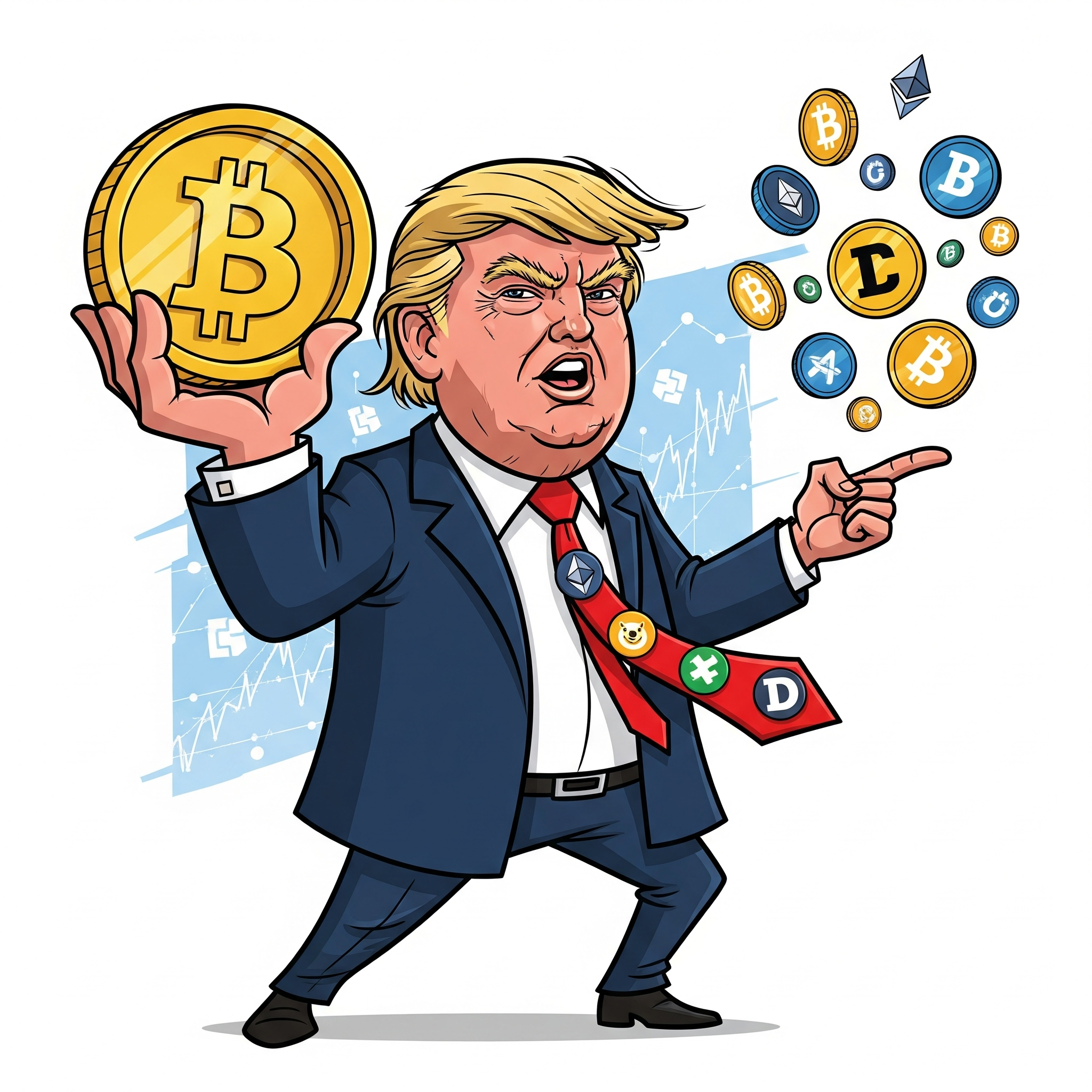
The current U.S. administration, under President Donald J. Trump, has executed a rapid and comprehensive pivot in its approach to digital assets, moving from a position of historical skepticism to one of strategic embrace. This new doctrine is not a collection of isolated policies but a coherent, multi-pronged strategy designed to position the United States as the global leader in digital finance. The core of this strategy is built upon a series of foundational executive orders, landmark legislative acts, and a fundamental philosophical shift within key regulatory bodies.
The administration’s vision is articulated through several key pillars: the establishment of a clear and secure regulatory framework for stablecoins via the GENIUS Act, a definitive prohibition of Central Bank Digital Currencies (CBDCs) through the Anti-CBDC Surveillance State Act, and a major reorganization of the Securities and Exchange Commission (SEC) to facilitate, rather than impede, innovation. Furthermore, the strategic establishment of a national Bitcoin reserve represents a monumental act of legitimization for digital assets. The stated objectives of this doctrine are to foster innovation, strengthen the U.S. dollar's global reserve status, protect consumer privacy and financial freedom, and attract massive investment and talent to the American digital asset sector.
The impact of these policy changes has been immediate and profound. Bitcoin's price has surged past $100,000 and is approaching $150,000, pushing the total cryptocurrency market valuation beyond $4 trillion for the first time.This domestic policy shift is also setting an international precedent, with countries like Pakistan and Bhutan exploring their own Bitcoin reserves, and emerging economies such as India looking to the U.S. framework as a potential blueprint for their own regulatory efforts.This report provides an in-depth analysis of this new doctrine, examining its components, underlying strategic rationale, and far-reaching global implications.
Part I: Forging a New Digital Asset Doctrine
A Shift in Stance: From Skepticism to Strategic Embrace
The current administration's digital asset policy represents a significant ideological and political pivot. President Trump, who had previously expressed skepticism toward cryptocurrencies, has become a vocal proponent, stating that the U.S. must "stay in the front of this one".This transformation is not a coincidence; it is a strategic alignment with a burgeoning industry that provided significant political and financial support for his 2024 campaign, with executives "strongly support[ing] Trump's 2024 campaign" and contributing "millions" to his efforts.The new policy effectively rewards this political support by delivering on a campaign promise to position America as the "global leader in cryptocurrency" and make the U.S. the "crypto capital of the world".
A central element of this strategic shift is the deliberate and explicit reversal of the previous administration's approach. The new executive order, "Strengthening American Leadership in Digital Financial Technology," explicitly revokes former President Joe Biden's EO 14067 and the Treasury Department's Framework for International Engagement on Digital Assets.This act of reversal frames the new policy as a direct corrective action against what is portrayed as an era of unfair attacks on digital assets.The administration's support for the Anti-CBDC Surveillance State Act is similarly positioned as a direct response to the "Biden Administration['s]" alleged willingness to create a "CBDC surveillance-style system," turning digital asset policy into a key battleground in a broader political and ideological conflict.This framing suggests that the policy is as much about political differentiation and an appeal to a specific voter base as it is about fostering economic innovation.
The Foundational Executive Orders of 2025: A Timeline of Action
The administration's digital asset agenda was initiated and solidified through a series of foundational executive orders (EOs) in the first half of 2025, demonstrating a high degree of operational intent and a desire to act swiftly.
On January 23, 2025, the President signed the EO titled "Strengthening American Leadership in Digital Financial Technology".This order serves as the master blueprint for the entire strategy. It mandates the protection and promotion of open public blockchain networks, the promotion of lawful dollar-backed stablecoins to reinforce the U.S. dollar's sovereignty, and a prohibition on the establishment and use of a Central Bank Digital Currency (CBDC) within the United States.Critically, the EO established a new "President's Working Group on Digital Asset Markets," to be chaired by a newly created position, the "Special Advisor for AI and Crypto," a role held by David Sacks.The working group was tasked with proposing a comprehensive federal regulatory framework for digital assets within 180 days, focusing on market structure, consumer protection, and risk management.
This initial EO was followed by another landmark action in March 2025, which established a "Strategic Bitcoin Reserve" and a "U.S. Digital Asset Stockpile".This order prohibits the U.S. government from selling any Bitcoin it has acquired through law enforcement and allows the Treasury and Commerce Departments to develop plans to acquire additional Bitcoin, signaling a profound shift in the government's posture towards the asset.This action is not just a passive holding of assets; it is a monumental act of legitimization that positions Bitcoin as a strategic national asset and a leader among nations in government digital asset strategy.
A separate executive order also mandated an investigation into whether banks have discriminated against certain industries, including cryptocurrency companies.This addresses a key grievance from the industry, which has long felt marginalized by the traditional banking system. By ordering a probe into this alleged "debanking," the administration signals its commitment to ensuring the crypto industry has fair and equal access to banking services, thereby integrating it more fully into the mainstream financial ecosystem. These EOs, deployed in a coordinated sequence, demonstrate a calculated use of executive authority to rapidly set the policy direction, establish new institutional bodies, and address key industry pain points before the slower legislative process could take hold.
Part II: The Legislative Pillars of Digital Finance
The GENIUS Act: A Regulatory Blueprint for Stablecoins
The GENIUS Act, officially titled the Digital Asset Market Clarity Act of 2025, is the legislative centerpiece of the administration's strategy, designed to provide a clear and secure framework for stablecoins. The Act officially recognizes stablecoins as financial products and establishes a comprehensive legal and policy framework for their operation.Its core provisions are designed to foster trust and stability in the burgeoning market, which currently holds a valuation of approximately $250 billion.
Key requirements of the GENIUS Act include:
- A mandate for all stablecoins to be backed 1:1 with liquid reserves, such as cash or short-term U.S. Treasuries.
- A requirement for issuers to provide monthly, public disclosures of the composition of their reserves.
- The implementation of strict marketing rules to protect consumers from deceptive practices, including prohibitions against misleading claims that stablecoins are government-backed, federally insured, or legal tender.
- In the event of an issuer's insolvency, the Act prioritizes stablecoin holders' claims over all other creditors, providing a crucial backstop for consumer protection.
The Act's strategic intent extends far beyond domestic regulation. The administration explicitly aims to use stablecoins as a tool to ensure the continued global dominance of the U.S. dollar as the world's reserve currency.By driving demand for U.S. Treasuries, stablecoins will play a critical role in anchoring a new, digital financial system to the U.S. dollar. The framework is designed to de-risk the stablecoin market for traditional financial institutions and tech giants, such as JPMorgan Chase, Amazon, Mastercard, and Bank of America, which are reportedly exploring the launch of their own stablecoins.This regulated environment provides the institutional clarity and safety necessary for these large, risk-averse players to enter the market, effectively bridging the gap between traditional finance and the digital asset space and ensuring that future financial innovation occurs on American soil and under American rules.
The Anti-CBDC Surveillance State Act (H.R. 1919)
The Anti-CBDC Surveillance State Act (H.R. 1919) serves as the ideological counterweight to the GENIUS Act. This bill, which the administration strongly supports, prohibits the Federal Reserve from developing or issuing a Central Bank Digital Currency without explicit congressional authorization.The legislation is framed as a bold defense of American principles, specifically "financial privacy and constitutional liberties".
The administration's policy materials explicitly distinguish a CBDC from decentralized digital assets. A CBDC is described as "government-controlled, programmable money" with transactions occurring on a government-managed ledger, which could be used for surveillance or to "suppress politically unpopular activities".This stands in stark contrast to the administration's promotion of open, decentralized digital assets. By codifying a permanent ban on a government-controlled digital currency, the administration aims to prevent what it perceives as a threat to individual freedoms and solidify its image as a champion of privacy and financial liberty. This legal action serves a dual purpose: it provides a definitive reassurance to the crypto industry and aligns the administration's digital asset policy with a conservative political base that is skeptical of government overreach and potential surveillance.
Part III: Reshaping the Regulatory Environment
The SEC's New Path Forward: The Crypto Task Force
A critical component of the administration's strategic shift is the fundamental overhaul of the regulatory approach at the Securities and Exchange Commission (SEC). Under Acting Chairman Mark T. Uyeda, the SEC announced the formation of a new "Crypto Task Force" on January 21, 2025, which marks a significant departure from the previous strategy of "regulation by enforcement".This previous approach had created a hostile and confusing environment for digital asset innovation. The new task force, led by Commissioner Hester Peirce, signifies a move toward a more collaborative and clear regulatory framework.
The task force's mandate is comprehensive and reflects the administration's new philosophy. Its specific objectives include:
- Clarifying the regulatory status of different categories of crypto assets as securities.
- Identifying crypto assets or related areas that fall outside the SEC's jurisdiction.
- Exploring a potential "safe harbor" for certain coin and token offerings.
- Providing a practical path for crypto asset securities to register.
- Reworking existing rules on custody and clearing agencies to better accommodate digital assets.
- Creating a "cross-border sandbox" to facilitate international crypto projects.
Commissioner Peirce's leadership is a deliberate signal of this new direction. She has long criticized the SEC's reliance on enforcement actions without providing adequate guidance, and her leadership confirms the agency's commitment to a new, more transparent approach that seeks input from investors, industry participants, and academics.The task force is actively welcoming requests for "no-action letters," a practice that had fallen out of use with respect to crypto and is now being revived to provide regulatory clarity.This alignment between the executive branch's policy goals and the actions of a key regulatory agency demonstrates a tightly coordinated effort to bring coherence and predictability to a previously chaotic regulatory landscape.
Part IV: Global Impact and International Ripple Effects
The "Trump Rally": Market Responses and Global Valuation
The comprehensive U.S. policy announcements have had a massive and immediate impact on the global cryptocurrency market. The promise of a clear and supportive regulatory framework has injected new confidence, leading to a significant rally in digital asset prices. Bitcoin, the world's most prominent cryptocurrency, has surged past $100,000 and is now approaching $150,000.This ascent contributed to the total crypto market valuation surpassing $4 trillion for the first time.This market reaction is a powerful testament to the global influence of U.S. policy and the critical importance of regulatory certainty in driving market growth and institutional adoption. One report noted that the price of bitcoin was up 2% on a Thursday to $116,542 following the signing of an executive order to allow higher-risk investments like cryptocurrency in 401(k) accounts.
Adoption Abroad: A New American Blueprint
The ripple effects of the U.S. policy shift are being felt globally. A growing number of countries are reportedly following the U.S.'s lead, with some taking decisive steps to integrate digital assets into their national economic strategies. For example, Pakistan's Crypto Council CEO has revealed the country's plan to establish a Bitcoin reserve, while Bhutan has disclosed a substantial BTC reserve valued at $1.3 billion, which represents nearly 40% of its GDP.These actions are not isolated events; they are evidence of the U.S.'s successful soft power in the digital finance arena, as other nations look to the American framework as a viable and successful model.
The U.S. policy also has significant implications for major global players like India. India is the world's largest recipient of remittances, receiving $130 billion in 2024, and stands to benefit greatly from the efficiency and low costs of stablecoin-enabled transfers.Although India remains in a "regulatory grey area" with a heavy taxation regime and a pending crypto bill since 2021, the GENIUS Act offers a potential blueprint for a new regulatory path forward.The Act's principles of simple licensing procedures, full reserve mandates, and transparency through audits could serve as a model for India to adopt legislation that fosters trust and innovation, thereby enabling the secure and compliant use of stablecoins and other Virtual Digital Assets (VDAs).This demonstrates how the U.S. is not just innovating domestically but is actively exporting a regulatory model that could shape the global digital financial system.
Conclusion: A Forward-Looking Perspective
The administration's digital asset doctrine is a coherent and multi-faceted strategy that leverages executive authority, legislative action, and regulatory reform to achieve a singular vision: the establishment of the United States as the global leader in digital finance. This proactive embrace of the digital asset industry is driven by a desire for economic leadership, a specific political ideology that champions financial liberty and individual privacy, and a response to the geopolitical imperative of maintaining American dominance in a new technological era.
The policies outlined in this report—from the definitive stablecoin framework of the GENIUS Act to the prohibition of government-controlled CBDCs—are not just a collection of new rules. They are foundational elements of a new institutional infrastructure designed to attract innovation and investment while protecting the sovereignty of the U.S. dollar. The shift at the SEC from a punitive approach to a collaborative one, spearheaded by a pro-innovation task force, provides the necessary regulatory clarity to unlock the full potential of the sector.
While the strategy is designed to promote free-market innovation, it is important to note that it is also a form of centralized guidance. By defining the rules for stablecoins and explicitly legitimizing certain assets like Bitcoin, the administration is actively shaping the market's evolution, rather than allowing it to develop entirely unconstrained. This calculated approach is intended to de-risk the sector for traditional financial players, thereby ensuring that the digital future is built within a framework of American law and values. The international ripple effects already observed in nations like Pakistan, Bhutan, and India suggest that the U.S. is not just participating in the global digital asset landscape but is actively setting its standards and building the infrastructure for a future financial system in its own image.